Professional food safety experts located in Brampton help maintain restaurants, food distribution facilities, baking enterprises, warehouses, and mobile food units in compliance. They disinfect high-touch surfaces, food-contact areas, equipment, floors, drains, restrooms, and food handling areas using approved sanitizers, in correct dilution, and using documented contact periods.
Essential Summary
- Brampton's food safety cleaning professionals maintain restaurants, grocery departments, commissaries, warehouses, bakeries, schools, mobile vendors, and allergen-sensitive operations.
- Frequently contacted areas, food-contact equipment, kitchens, floors, drains, restrooms, and storage areas are treated using area-specific procedures to avoid cross-contamination.
- Confirmation of approved sanitizer dilution, appropriateness, and contact time is conducted by trained specialists, with conclusion filed using samples, reviews, and correction logs.
- Danger, output capacity, transitions, incidents, and guidelines ought to inform hygiene schedules, with daily, weekly, and periodic duties allocated by section.
- Vendors need to exhibit hazard analysis knowledge, public-health expertise, safety training training, liability, references, color-categorized instruments, and audit-ready hygiene paperwork.
What Brampton Venues Require Food Safety Cleaning?
You must maintain food safety cleaning if your business is regulated by public health inspection, food premises regulations, or internal HACCP-based controls. This covers dining establishments, employee cafes, distribution hubs, market sections, meat shops, fish stands, retail outlets, and food service kitchens.
You also need documented food sanitation in supply warehouses, manufacturing facilities, refrigerated storage, bakeries, school feeding programs, reception facilities, and delivery centers. Temporary and mobile establishments count too, including catering vehicles, market vendors, and seasonal stalls. If your staff handle ingredients, section prepared foods, heat finished items, or keep allergens stored, your facility needs written cleaning standards. In Brampton, sanitation isn't optional; it's part of legal, operational, and consumer protection compliance.
What Do Brampton Cleaning Professionals Handle?
You need professional cleaners who disinfect frequently contacted areas, kitchens, floor surfaces, and restrooms to meet food safety and public health standards. They focus on these spaces because they pose the greatest danger for contamination spread, slipping risks, and hygiene violations.
By knowing exactly what gets cleaned, you can make sure your operation's sanitation protocols meet compliance standards.
Cleaning High-Touch Surfaces
Addressing high-touch surface sterilization is important for Brampton maintenance specialists because high-traffic areas can transmit microbes and organic matter around a location. You must have a scheduling system for disinfecting all high-touch items including handles, plates, switches, railings, control surfaces, POS systems, and refrigeration equipment. Employing surface identification mapping, specialists pinpoint every regularly used area and assign cleaning schedule
verify proper disinfection
Kitchen Areas, Floor Surfaces, and Bathroom Spaces
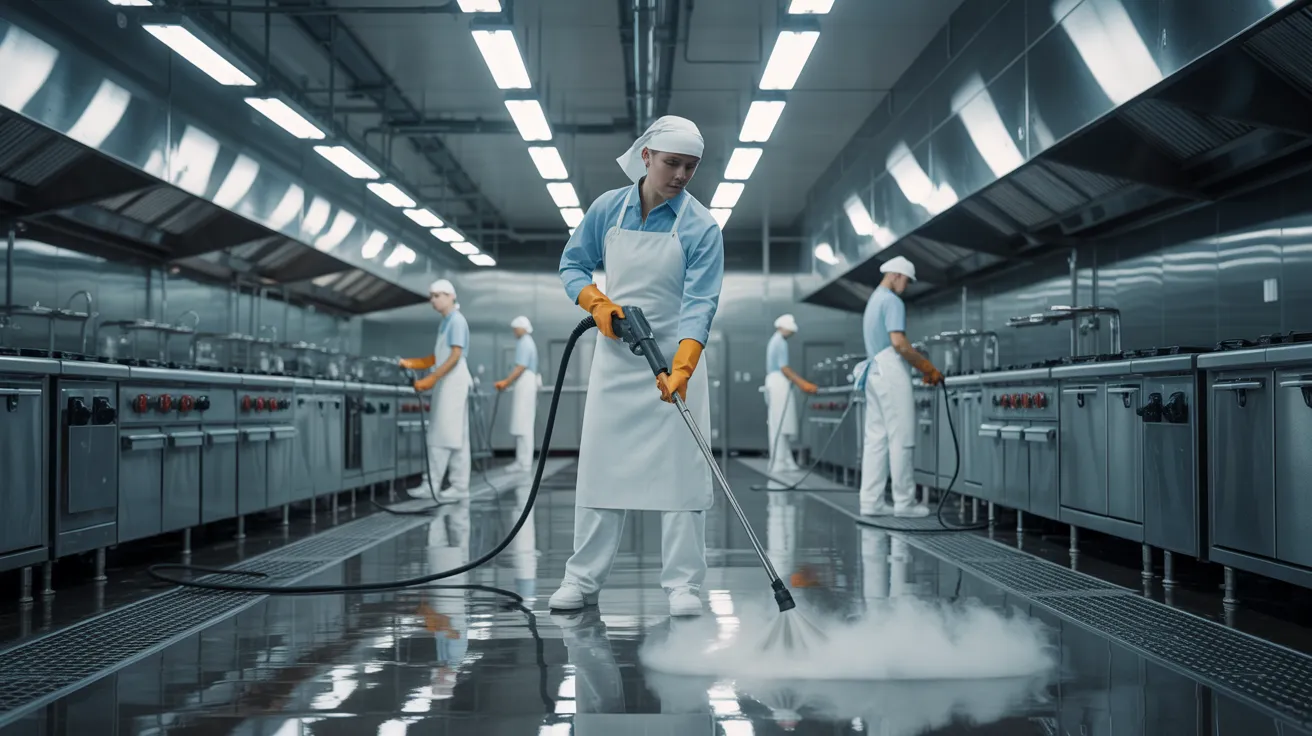
Expect Brampton cleaning experts to target kitchens, floors, and restrooms because each area carries distinct foodborne illness prevention, slip-and-fall, and sanitation risks. In industrial kitchens, you need grease removal from cooking stations, appliance surfaces, drain systems, preparation areas, and backsplashes to reduce contamination and pest pressure.
Floor care that is documented should also be anticipated. Technicians clean and remove buildup from tile grout, ceramic surfaces, and vinyl floors, then apply correct drying techniques so you can limit falls and meet regulatory standards. They also handle entry points where dampness and dirt enter the building.
In restrooms, cleaners disinfect contact surfaces, bathroom hardware, partition walls, accessory dispensers, and receptacles then refill supplies and eliminate odor. They also service restaurant moprooms, where chemical storage, sink hygiene, and drainage conditions can affect sanitation compliance and staff safety daily.
Why Food Safety Cleaning Matters in Brampton
To adhere to health code requirements and succeed in audits, Brampton facilities must maintain food-safe cleaning standards. You also minimize bacterial spread through proper cleaning of food-preparation surfaces, appliances, and frequently-touched items. Most importantly, you safeguard community wellness by reducing the chance of food poisoning in your establishment.
Regulatory Code Requirements
Since Brampton food establishments must follow strict public health standards, your food safety cleaning directly impacts your capacity to satisfy health codes, safeguard diners, and sidestep regulatory penalties. You must maintain clean food preparation areas, written maintenance records, safe chemical management, and documented employee protocols that comply with municipal and provincial inspection expectations.
When cleaning standards weaken, notices, remedial directives, reputation damage, and service suspension from subsequent audits or enforcement reviews become threats.
Contamination Control
Meeting health code standards also depends on your capacity to stop cross-contamination during daily food handling and cleaning. You must keep raw items away from prepared dishes, clean work areas after each use, and store chemicals away from food-contact items. Clear procedures reduce transfer risks and ensure ongoing adherence to health checks.
Implementing allergen segregation helps ensure major allergens don't touch shared surfaces, containers, or equipment. Deploy dedicated cutting boards, color-coded tools, and strict utensil labeling so workers don't combine products while preparing or distributing. Require handwashing after handling raw meat, seafood, eggs, or allergen-containing products. Replace wiping cloths regularly, and validate disinfectant levels using test strips. When you train staff to follow these controls every shift, you establish a more hygienic, safer workplace that satisfies Brampton's food safety needs daily.
Community Health Safety
Should food safety cleaning collapse, you don't simply risk a failed inspection—you increase the potential of foodborne illness impacting customers, staff, and the wider Brampton population. You also weaken your role in protecting public health, especially in busy food facilities where pathogens travel quickly through surfaces, equipment, and touchpoints.
You need sanitation procedures that eliminate contaminants, sanitize correctly, and confirm effectiveness. That means following contact times, using approved disinfectants, documenting schedules, and training staff to meet regulatory standards. These controls support disease prevention by lowering microbial loads before they reach food or hands. In Brampton, strong sanitation shields at-risk groups, prevents disease spread, and enables you to show proper care. When you clean to standard, you don't just meet regulations—you substantially decrease danger and support safer food service throughout the region.
Why Is Cleaning Essential for Food Safety Compliance?
Comprehensive cleaning schedules promote food safety compliance by decreasing contamination threats, controlling pathogen growth, and ensuring your facility complies with sanitation requirements under HACCP-based programs and public health regulations. You confirm that food-contact surfaces stay visibly clean and microbiologically controlled, supporting documented preventive controls and inspection readiness.
Cleaning efforts additionally fortify allergen mitigation by extracting residues that can trigger undeclared allergen exposure.
When Do You Schedule Commercial Cleaning?
Step up cleaning pace during high-volume production, production changeovers, spillage occurrences, and after maintenance work.
daily routines
What Should You Look For in Brampton Cleaning Experts?
Screen providers initially by their food-safe sanitation requirements—not budget alone. You need to verify that every company meets CFIA, public health, and HACCP-aligned expectations for your operation. Demand proof of insurance, WHMIS compliance, training records, and management systems. Evaluate technician understanding of cross-contamination risks, chemical safety, and documented sanitation practices.
You must also evaluate operational reliability and oversight. Seek references from food facilities in Brampton, then assess response times, corrective-action procedures, and communication quality. Ensure the company enables supplier checks and can provide inspection-compliant records when authorities or third parties demand verification. Verify equipment care, colour-coded tools are deployed correctly, and site-specific hazards are understood. A qualified provider safeguards compliance, product safety, and your market standing.
What's included in a Food Safety Cleaning Plan?
Put together a written plan that clarifies every sanitation task, standard, and responsibility ahead of production commencement. You should list cleaning frequencies, approved chemicals, dilution rates, contact times, tools, and verification methods for each sector, surface, and equipment. Make sure in-depth article to include pre-operational inspections, corrective actions, and employee training requirements.
Your strategy should also tackle prevention of contamination, waste management, pest-control tactics, and scheduled records for facilities, drains, flooring, and food-preparation surfaces. Specify how you'll separate raw and ready-to-eat processes, facilitate ingredient tracking, and keep accurate allergen labeling through validated cleaning between product changes. You should establish accountability, keep signed records, and assess results against regulatory standards, HACCP controls, and customer requirements. When gaps appear, modify procedures immediately and instruct staff.
Frequently Asked Questions
Do cleaning services work during nighttime hours at Brampton properties?
Yes, you can contract sanitation providers to manage nighttime operations in Brampton facilities. You'll arrange nighttime cleaning around production schedules, security controls, and staffing levels. Providers generally establish nightshift logistics to prevent disruption, maintain standards, and log completed work. You should confirm timeframes, oversight, access procedures, and disposal methods before service starts.
Are emergency spill response solutions provided from sanitation professionals?
Yes, you can find many Brampton sanitation experts offering emergency response options. They manage hazardous materials, evaluate risks, contain affected areas, and perform swift decontamination to minimize risk and limit operational impact. You should verify response times, training credentials, protocols, and procedures. If your facility needs compliance, choose a service that documents incidents, maintains standards, and ensures verification.
Can plant-based disinfectants be used safely on food preparation areas?
In essence, green disinfectants remain safe for food-contact surfaces provided you buy products labeled food safe that adhere to regulatory standards. Confirm contact duration, concentration levels, and rinse procedures ahead of deployment. Plant-derived products lower chemical hazards, although you require evidence of effectiveness against harmful bacteria. For maintaining residue free surfaces, follow manufacturer instructions exactly and ensure the disinfectant complies with food industry regulations.
Will cleaning plans accommodate seasonal variations?
Certainly, cleaning schedules adapt to seasonal production changes well. Modify frequencies, staffing, cleaning agents, and validation steps to match with operational cycles while sustaining regulatory compliance. Reduce equipment downtime through scheduling cleaning amid changeovers, peak volumes, and operational patterns. Also revise procedural documents, employee training, and monitoring protocols to account transient threats, additional allergens, or increased soil loads. Ongoing evaluations keep your program current.
Do commercial cleaning providers instruct your team in sanitation best practices?
Yes, professional cleaning services typically educate your staff on hygiene standards. You get staff training on correct chemical application, contact times, cross-contamination prevention, machine breakdown, and documentation. They typically align training with HACCP, GMP, and CFIA or regional health department regulations. Many perform hygiene inspections to verify compliance, spot deficiencies, and reinforce corrective actions. This allows you to maintain consistent procedures, succeed in audits, and minimize contamination hazards daily.
Conclusion
By partnering with Brampton food safety and commercial cleaning experts, you aren't simply tidying—you keep your operation compliance-focused and your standards up to code. From kitchens to processing floors, every sanitized surface and organized space reduces pest risk and prevents costly issues. By scheduling cleanings on the right schedule and following a documented cleaning plan, you protect your team, customers, and your credibility. In a heavily controlled environment, clean spaces must be prioritized—they're essential to successful operations.